

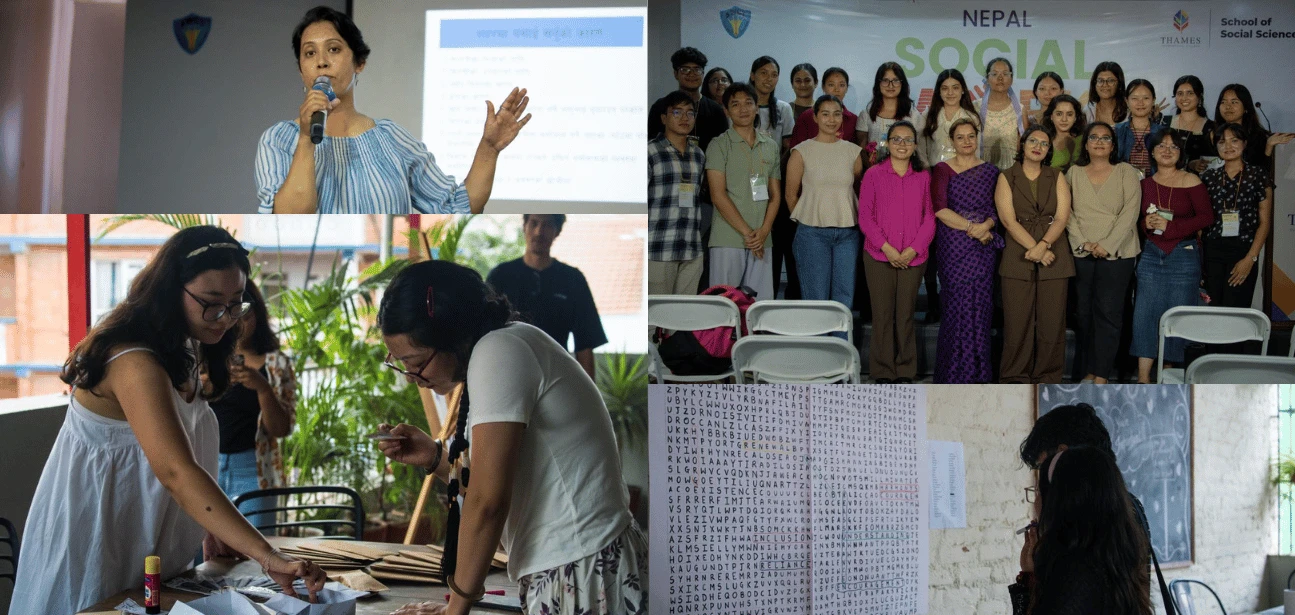
The second day of the symposium was more focused on the intellectual aspect of the theme with a plenary session and discussion panel with experts in various fields in the surrounding social and political issues of Nepal. The aim was to bring in insights from on-field activists, reporters, educators and researchers and engage students with knowledge beyond the books.
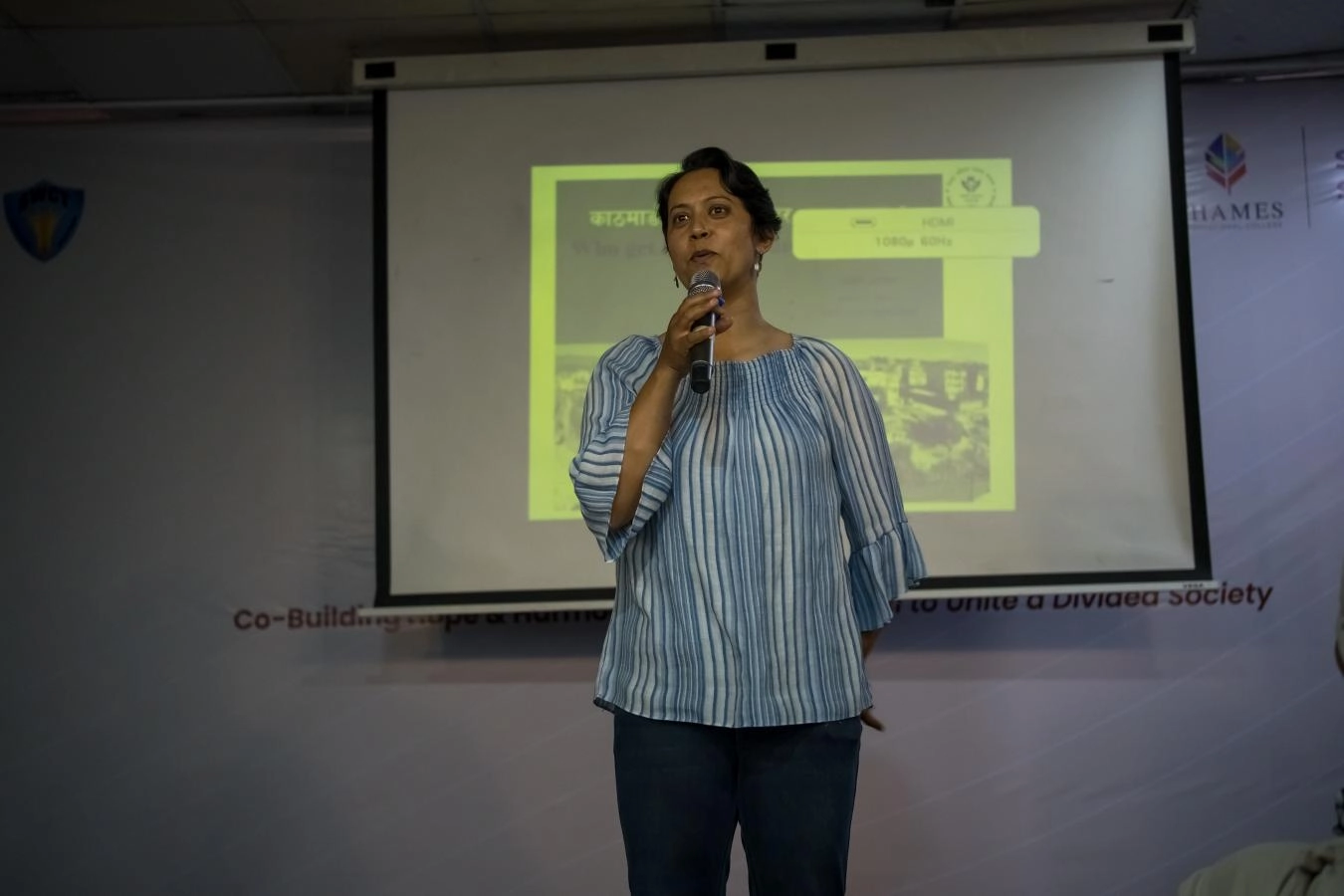
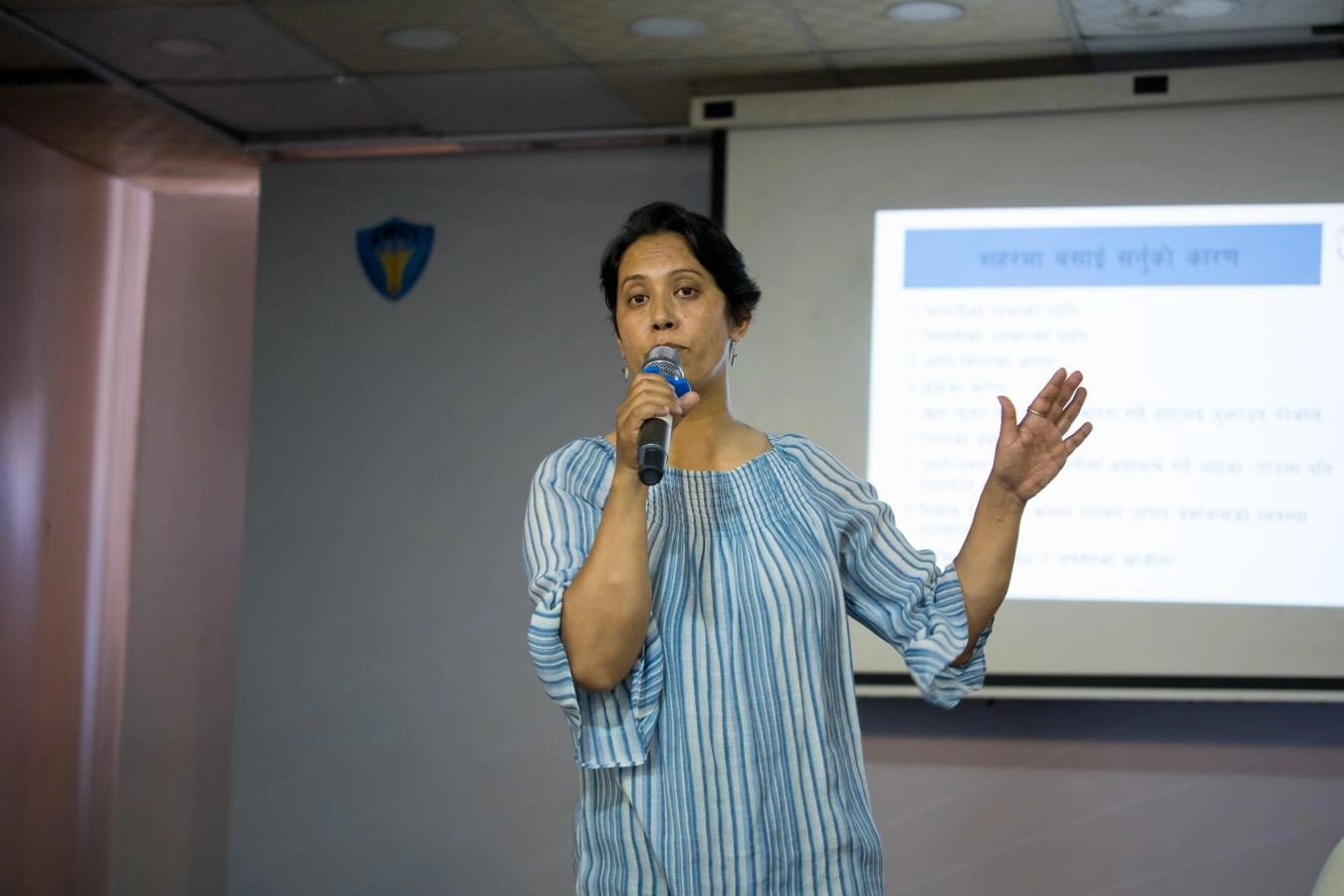
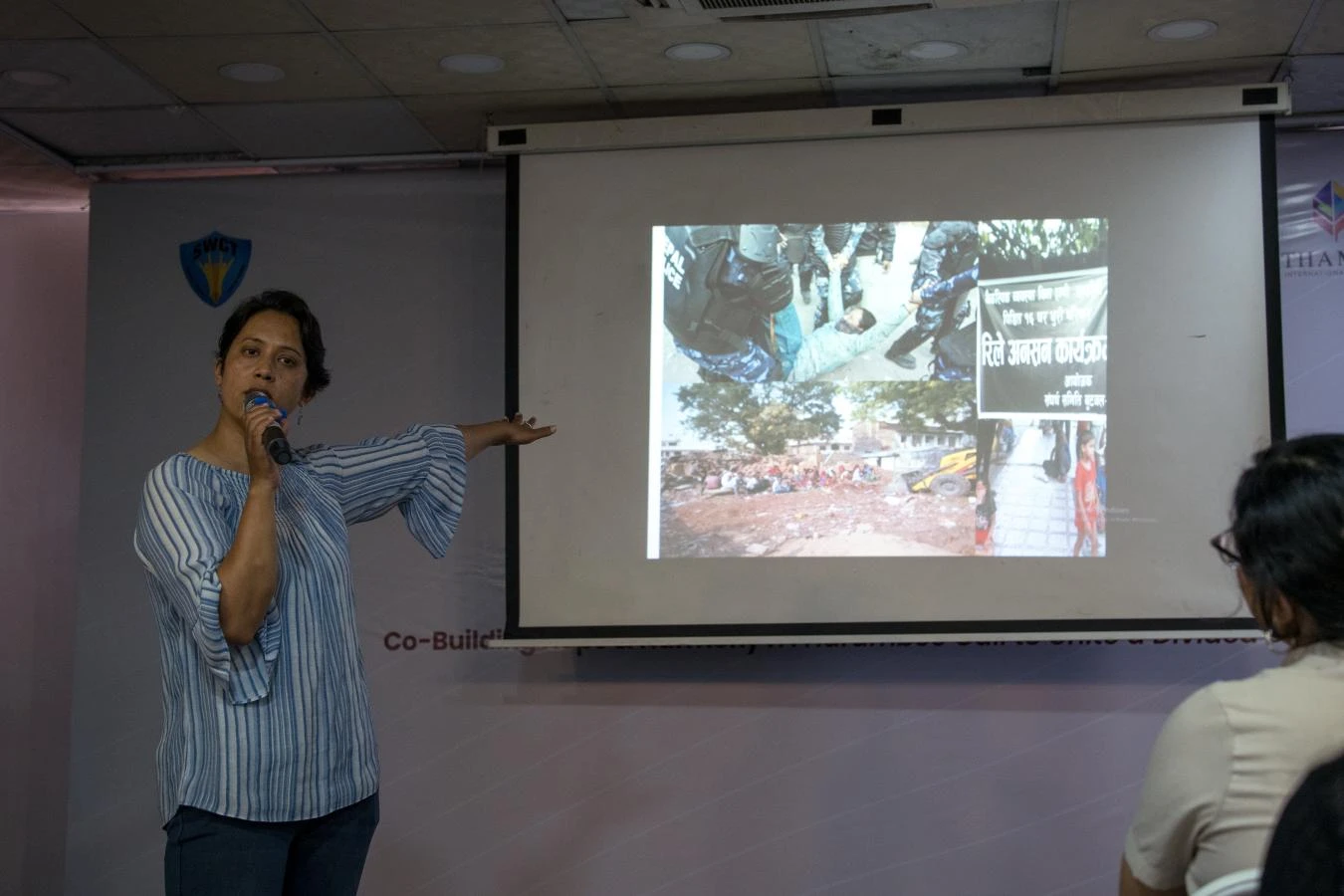
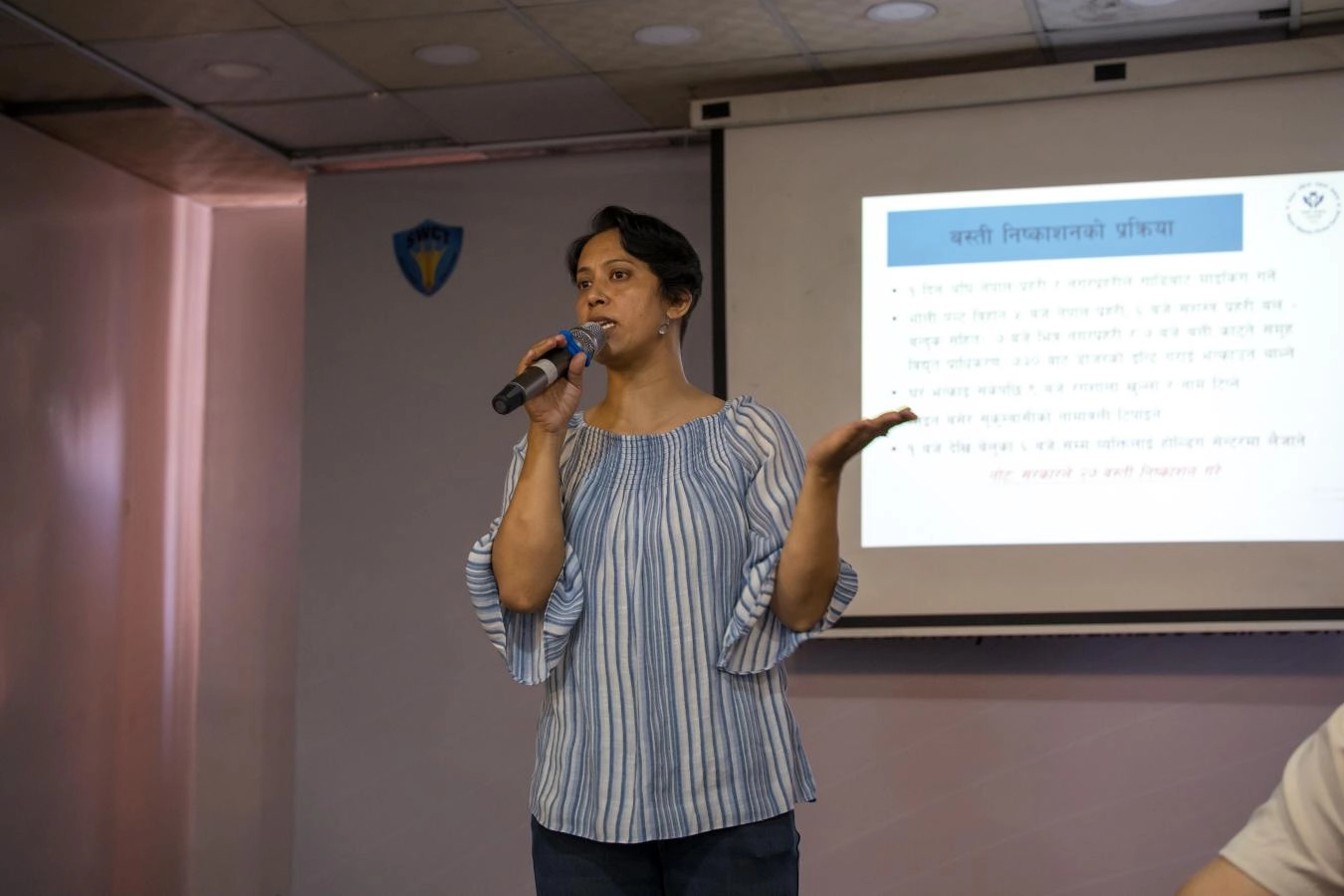
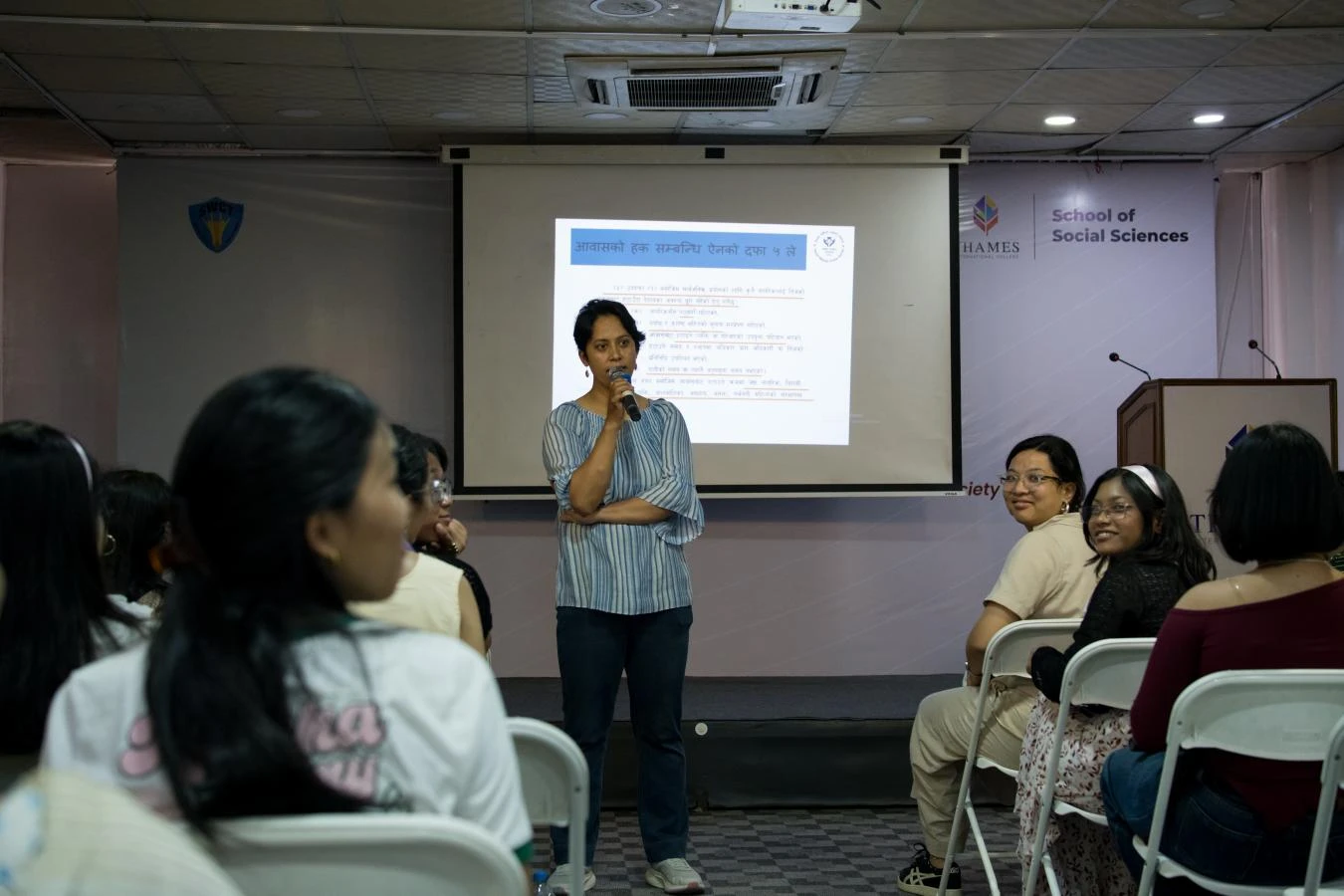
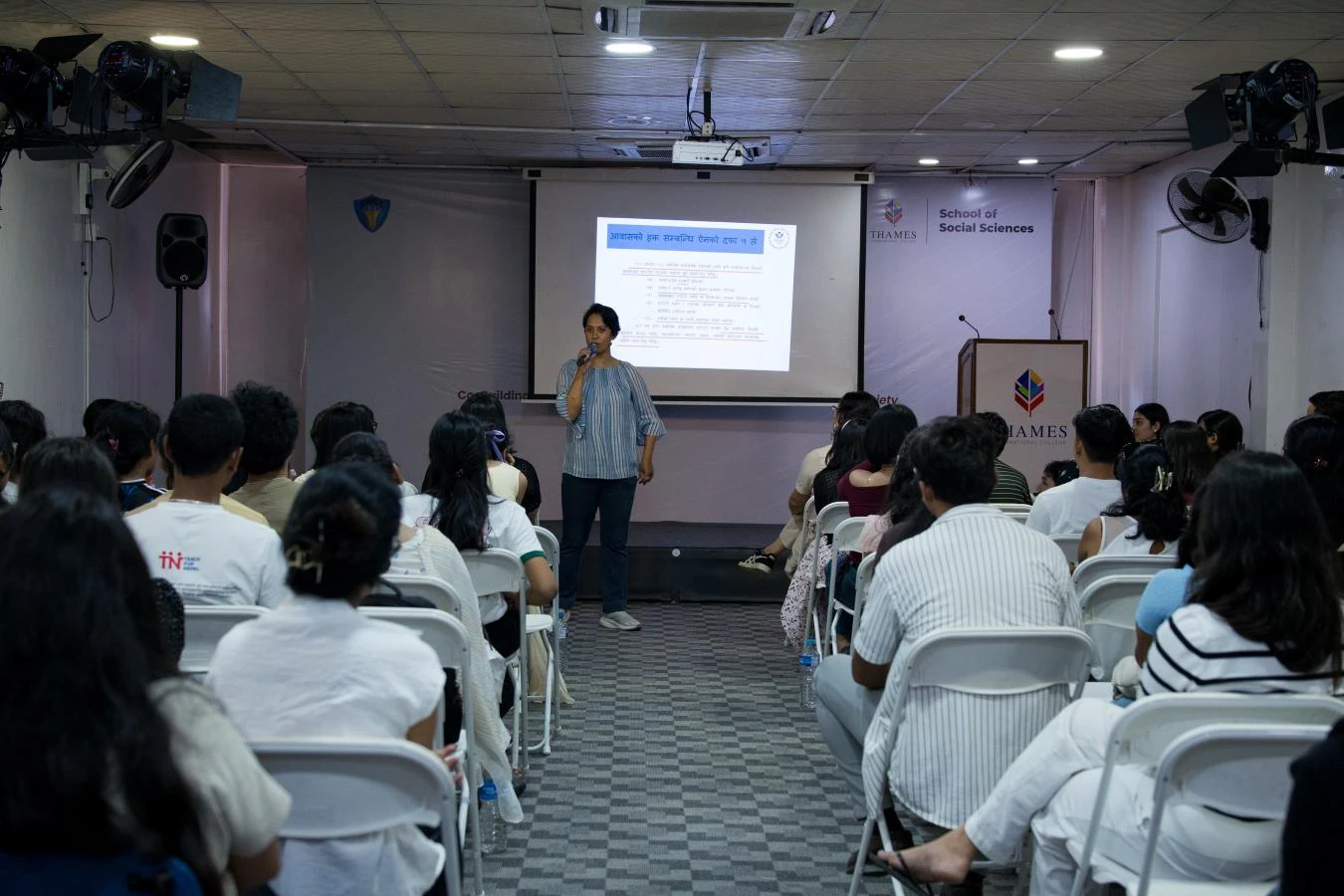
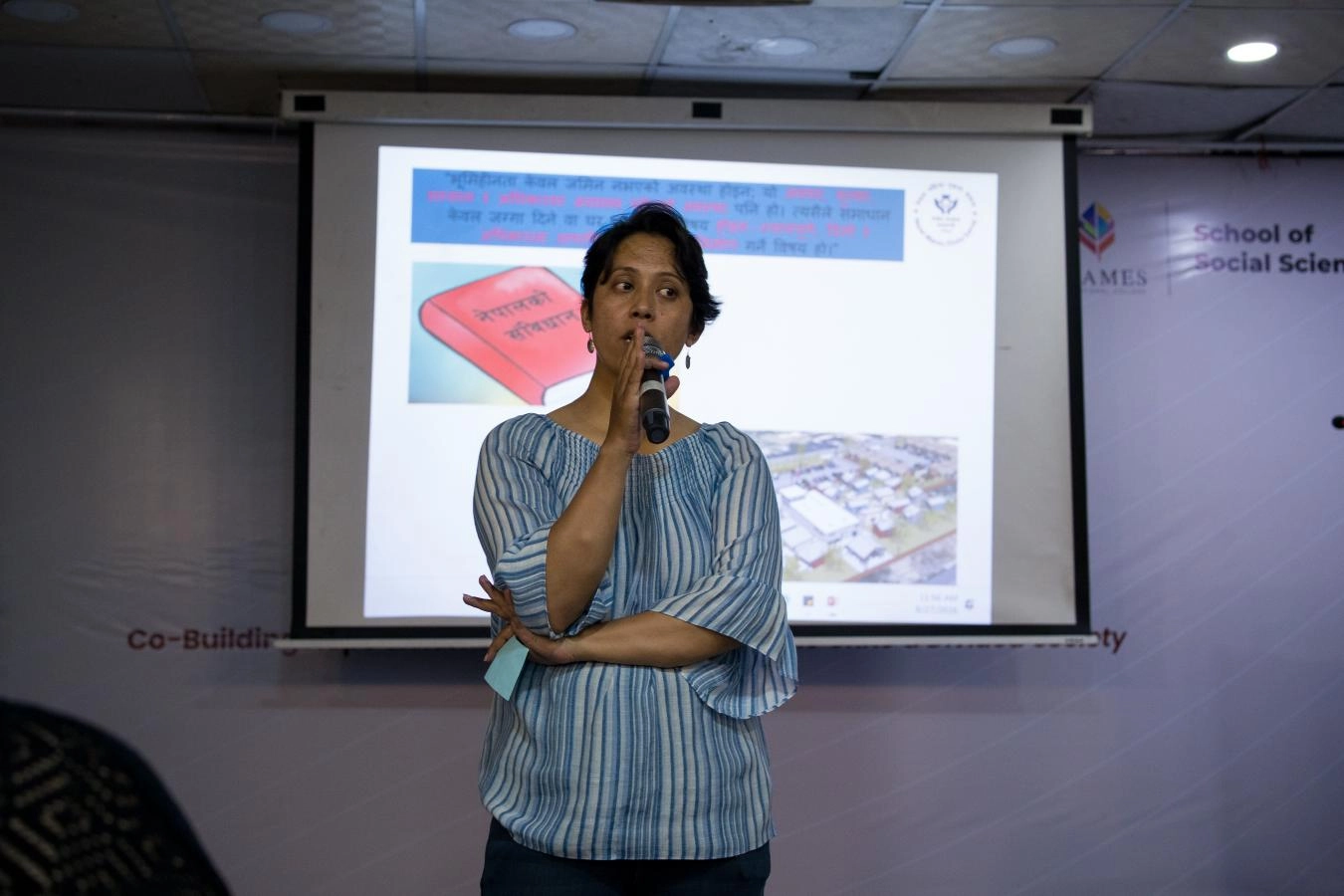
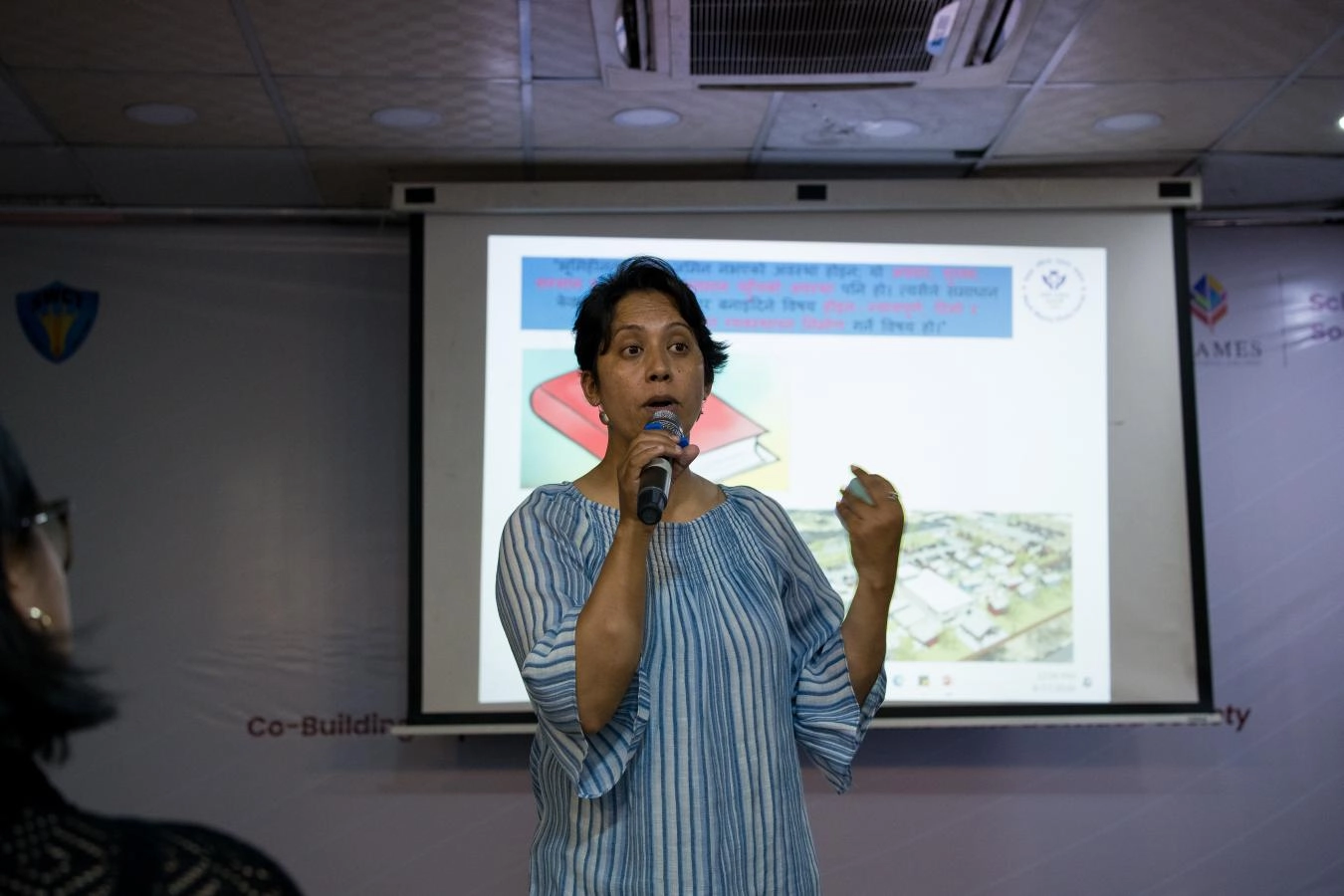
The day began with a plenary session titled “ who gets to call Kathmandu home?” by Bhagwati Adhikari, a member of the Nepal Mahila Ekata Samaj and activist actively working on the issue of the Sukumbasi displacement and eviction happening in Kathmandu Valley and other areas in Nepal. Adhikari shared stories of the affected people, the lack of government accountability and transparency on actions they were taking. She shared various legal and bureaucratic red tapes that were created for the Sukumbasi community and the bureaucratic processes that were not followed for the demolition of the settlements. She further talked about the part her and many other activists took to ensure the safety of the rights and dignity of the community. The discussion then moved to questions and answers from students on the process that should have been followed and the real intentions behind the demolition. The session provided insights on the actual reality of the brutal eviction and the media and social media depiction of the same.
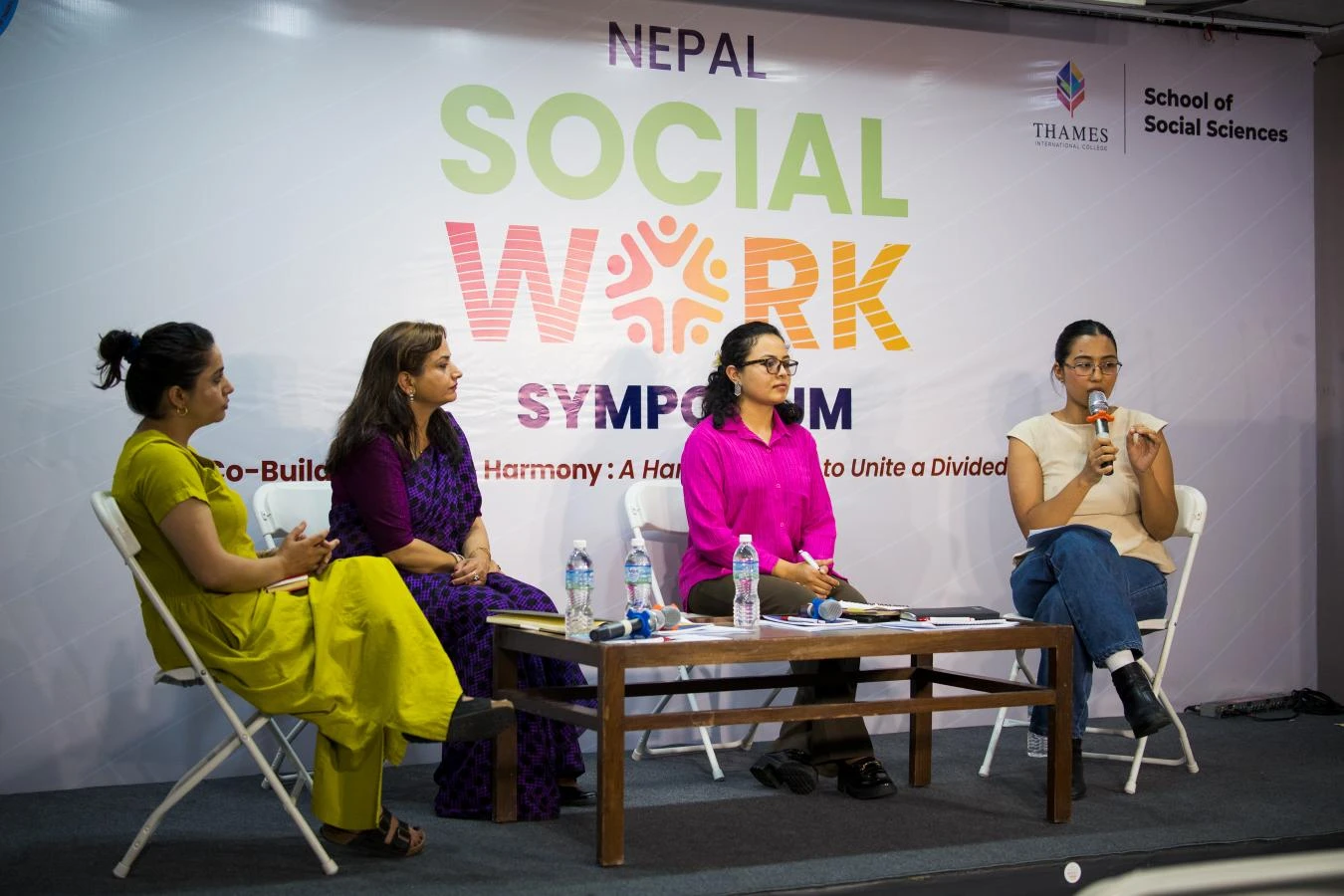
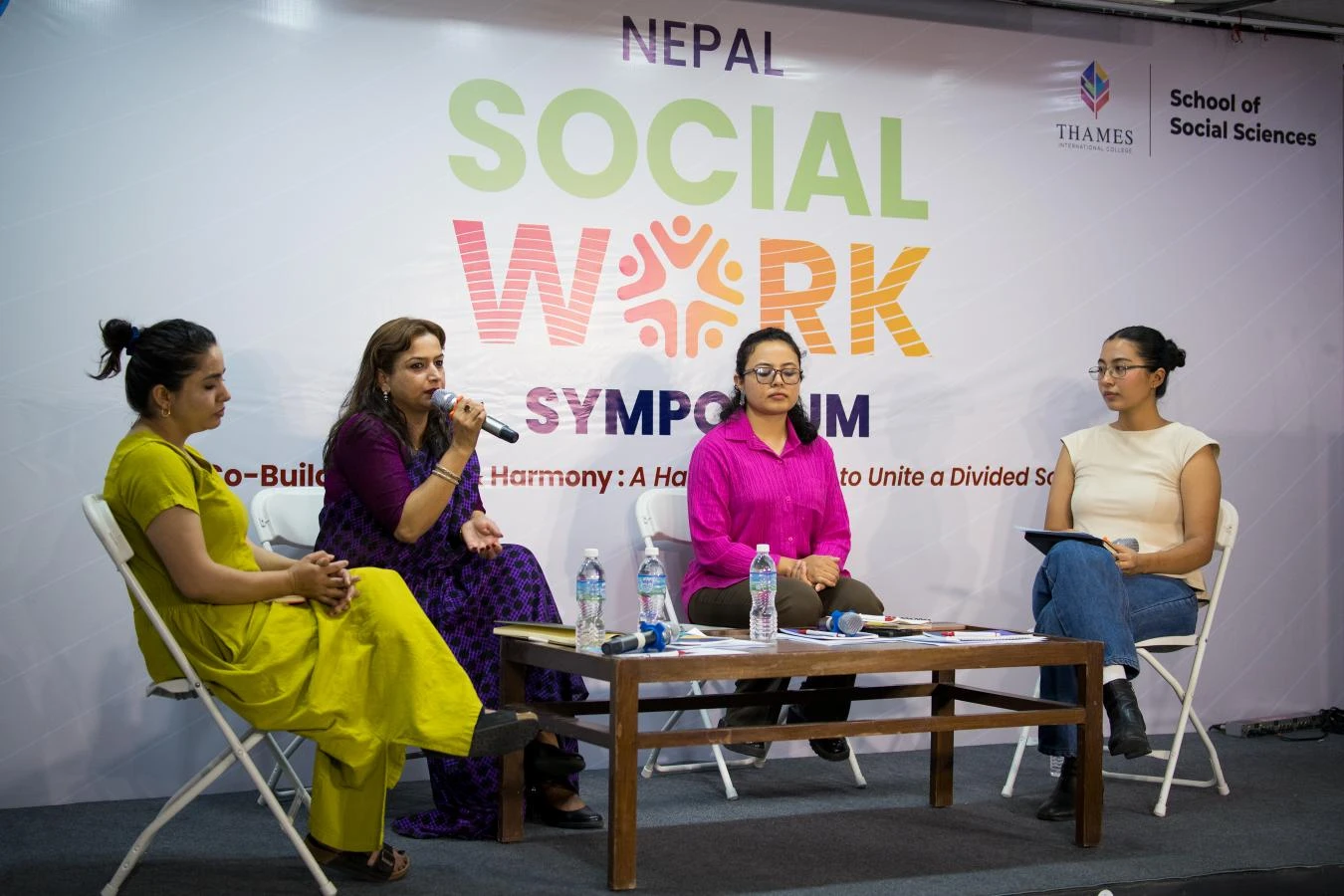
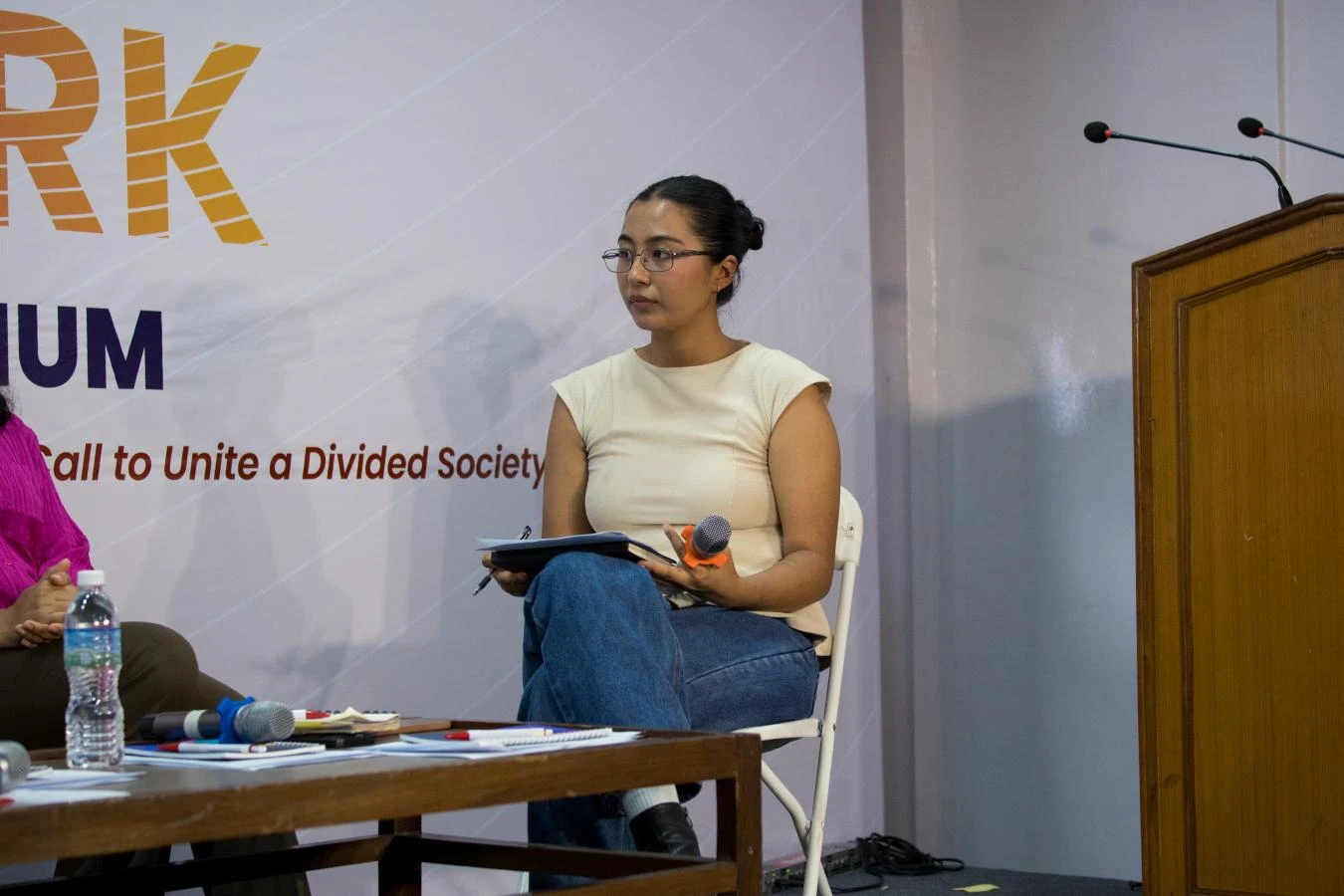
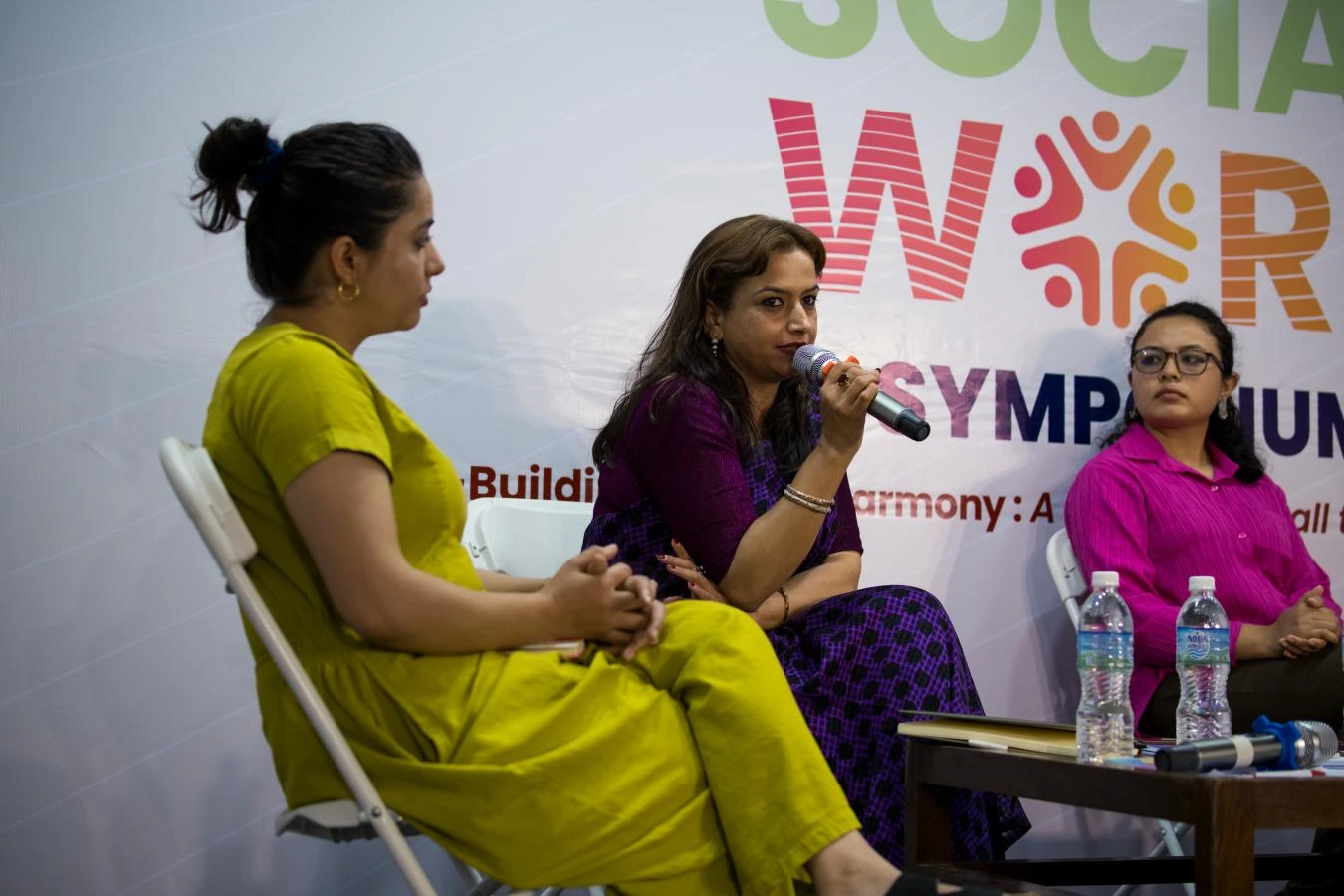
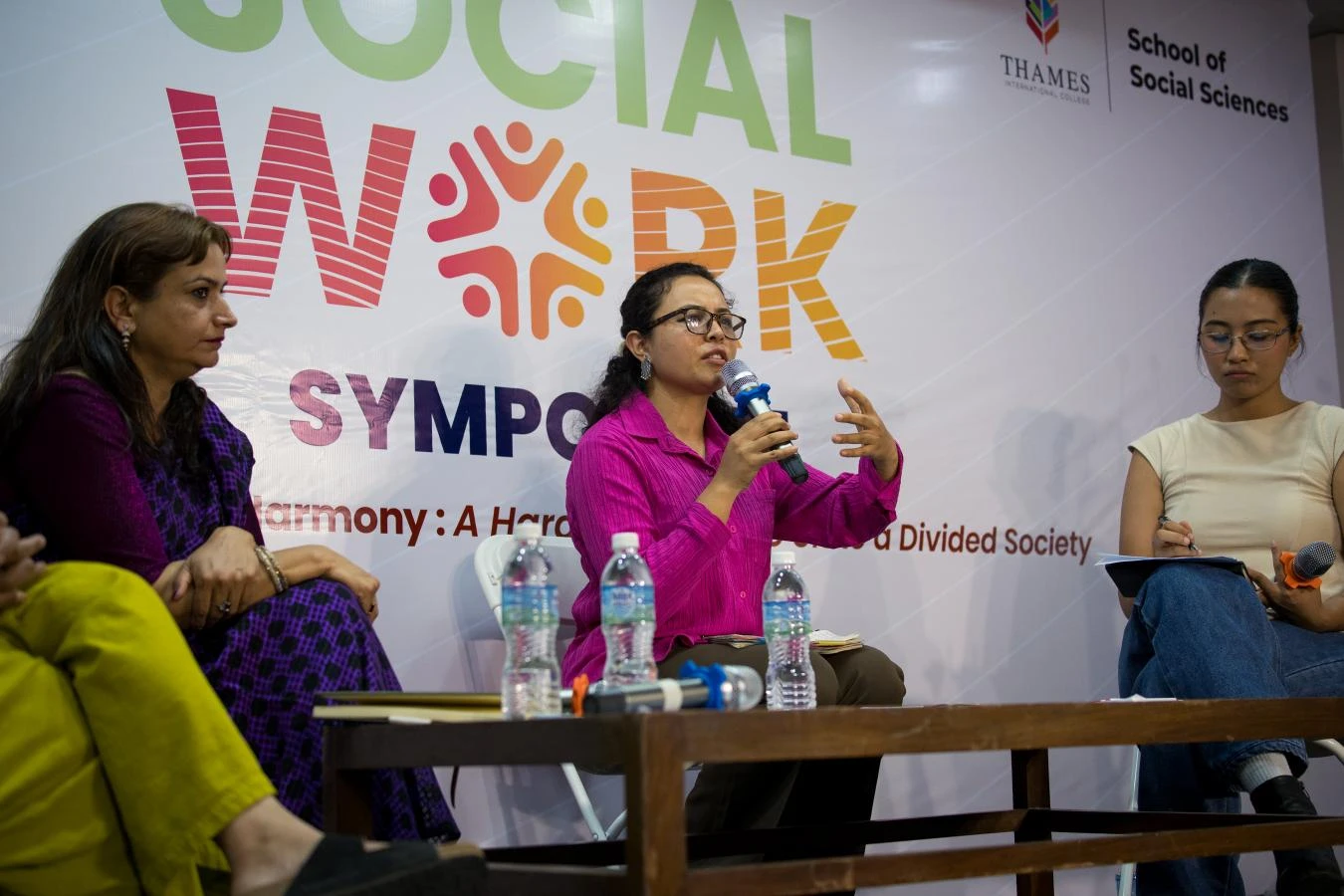
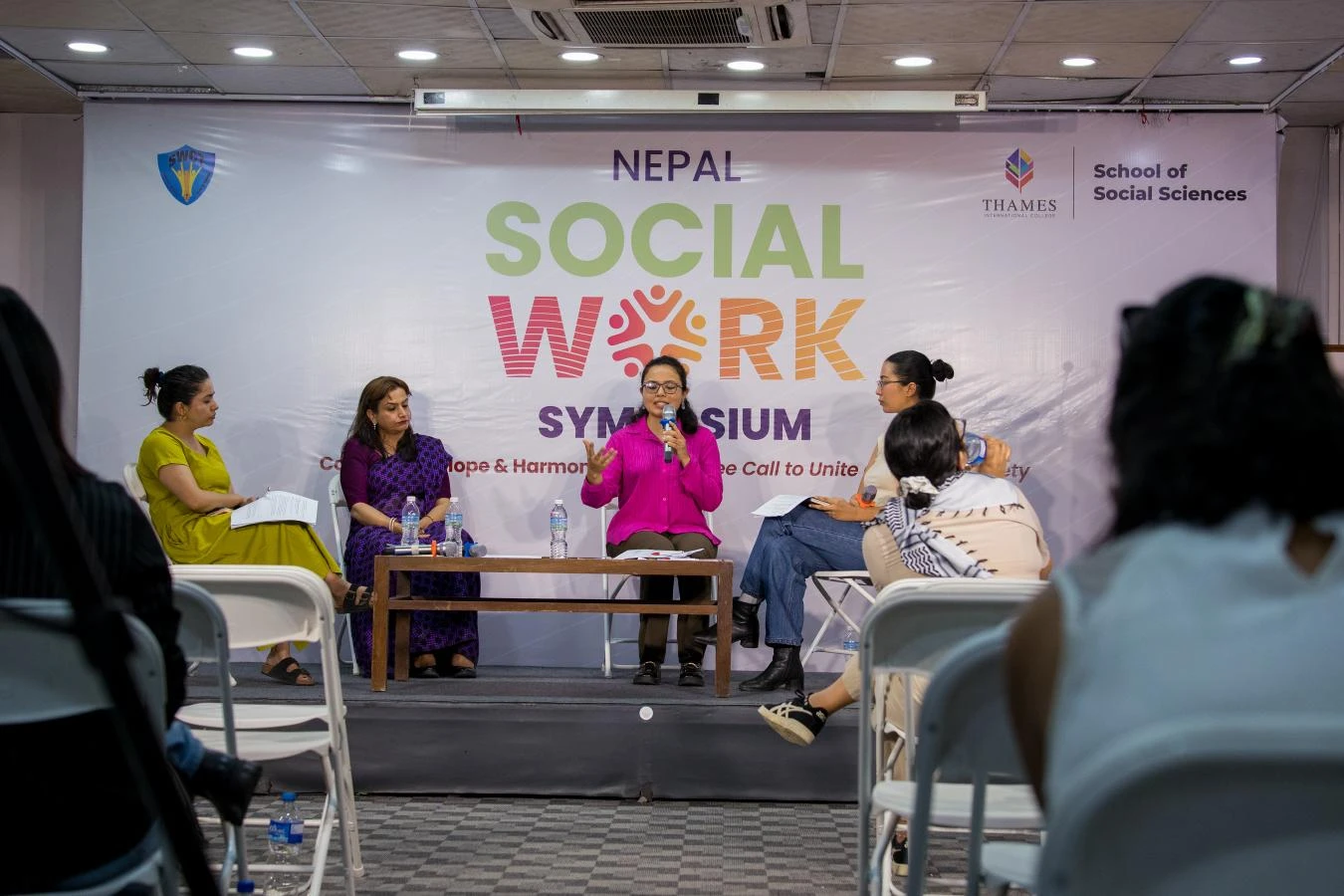
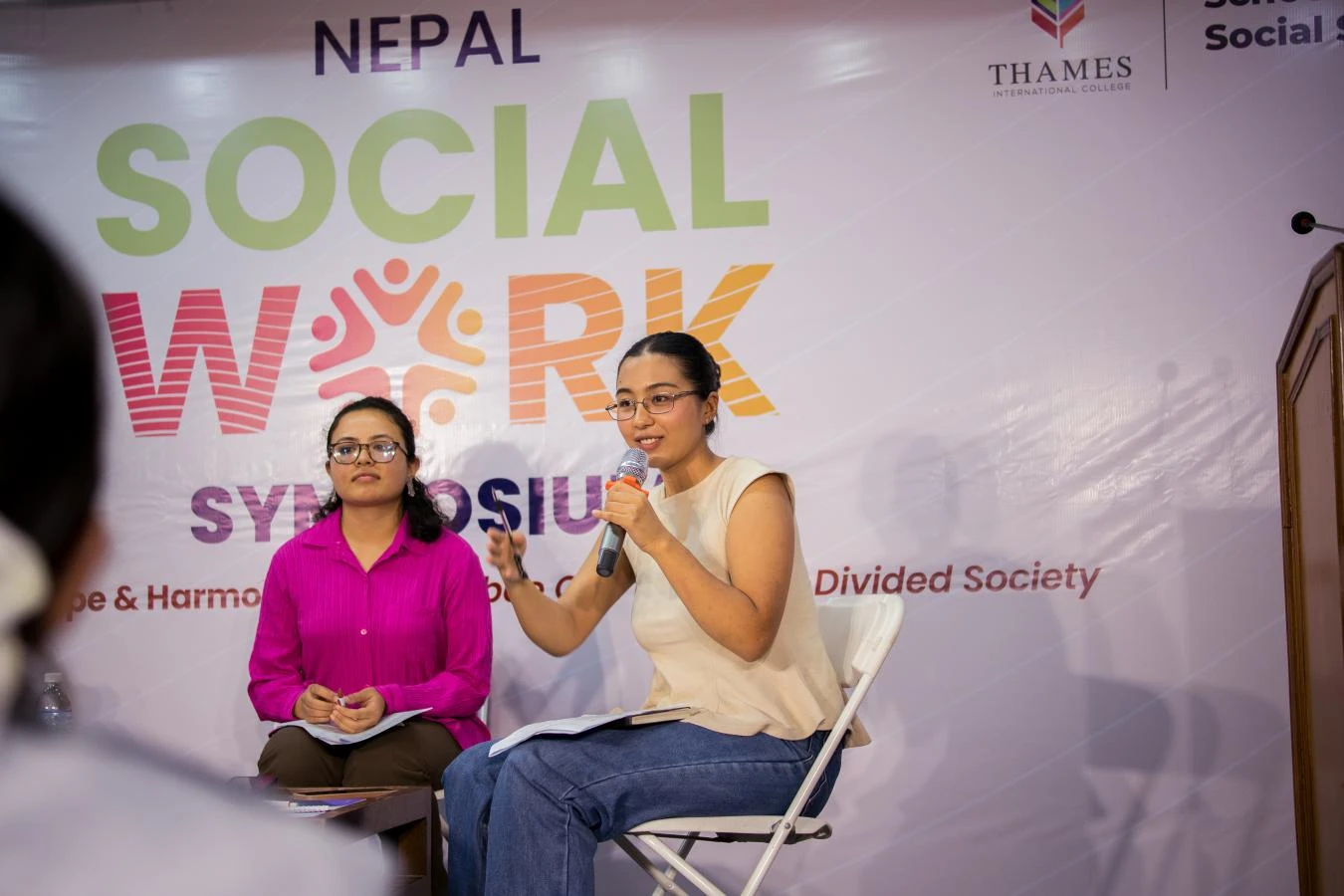
The second session was a panel discussion titled “ What would social reform practices and policies driven by collective hope look like?”. The panellists for this panel discussion were Sunita Neupane, an investigative journalist, Jamuna Siwakoti, HOD at Central department of gender studies at TU, Pratisha Joshi, a public policy researcher and Akina Singh, founding VP of FIG Nepal as the moderator. The panel discussion began with a chant on the swahili tradition of using ‘Harambee’ and ‘nyayo’ whilst the community came together for any activities or event. This set the stage for the discussion on collective action and hope. The discussion panel dived into talks about feminist spaces, classrooms and indigenous communities as core spaces of hope and harmony specially in the context of Nepal. The information fatigue that we see on people due to overflow of information and what story gets the spotlights and what stories are in the shadows. The importance of popularity and appearances more than the actual involvement of the community when making decisions were major issues covered in this panel. Recent events of GenZ movements, the brutal rape of Garima Chaudhary and the deadly floods in Rasuwa showed that collective action is and was always an important aspect of the massive changes in governance and policies in Nepal and yet there seems to be a lack of proper process for policy making in light of the newly formed Balen government. The students engaged in questions of patriarchy also playing a huge role in policy making and lack of clear feminist agendas in Nepal.

We care about your data in our privacy policy